
Are you 18 or older?
This site contains sexy-themed games and quizzes intended for adults. You must be at least 18 years old to enter.
This site contains sexy-themed games and quizzes intended for adults. You must be at least 18 years old to enter.
 Wuthering Heights
Margot Robbie and Jacob Elordi play Catherine and Heathcliff in a carnal, feverish rewrite of Emily Bronte's classic. Emerald Fennell turns the Victorian moors into a theater of obsessive desire, where love and possession blur until they become indistinguishable.
After Promising Young Woman and Saltburn, Emerald Fennell tackles a cornerstone of English literature and pries it open from within. Her Wuthering Heights, released theatrically on February 13, 2026 through Warner Bros, shifts the novel's center of gravity from the gothic moors to an almost predatory physical passion between Catherine and Heathcliff, played by Margot Robbie and Jacob Elordi with chemistry critics have called magnetic. An original score and album by Charli XCX helped turn the film into a cultural event well before release, fueling viral trailers and social media debate over its brazenly contemporary aesthetic layered onto a nineteenth century text. The R rating for sexual content comes as no surprise from a director increasingly fascinated by desire, obsession and power imbalance, rendered through lush, never explicit, constantly charged imagery. Critics were split, some praised Fennell's nerve in restoring the novel's original erotic charge, often softened in earlier adaptations, others criticized the liberties taken with the source material, calling the film more a provocative style exercise than a faithful adaptation. What remains beyond dispute is the sumptuous cinematography, a supporting cast including Hong Chau, Shazad Latif and Alison Oliver, and the film's ability to pull the period erotic drama back into the mainstream conversation, cementing Fennell as one of the boldest and most talked about voices in contemporary sensual cinema.
see full review
Wuthering Heights
Margot Robbie and Jacob Elordi play Catherine and Heathcliff in a carnal, feverish rewrite of Emily Bronte's classic. Emerald Fennell turns the Victorian moors into a theater of obsessive desire, where love and possession blur until they become indistinguishable.
After Promising Young Woman and Saltburn, Emerald Fennell tackles a cornerstone of English literature and pries it open from within. Her Wuthering Heights, released theatrically on February 13, 2026 through Warner Bros, shifts the novel's center of gravity from the gothic moors to an almost predatory physical passion between Catherine and Heathcliff, played by Margot Robbie and Jacob Elordi with chemistry critics have called magnetic. An original score and album by Charli XCX helped turn the film into a cultural event well before release, fueling viral trailers and social media debate over its brazenly contemporary aesthetic layered onto a nineteenth century text. The R rating for sexual content comes as no surprise from a director increasingly fascinated by desire, obsession and power imbalance, rendered through lush, never explicit, constantly charged imagery. Critics were split, some praised Fennell's nerve in restoring the novel's original erotic charge, often softened in earlier adaptations, others criticized the liberties taken with the source material, calling the film more a provocative style exercise than a faithful adaptation. What remains beyond dispute is the sumptuous cinematography, a supporting cast including Hong Chau, Shazad Latif and Alison Oliver, and the film's ability to pull the period erotic drama back into the mainstream conversation, cementing Fennell as one of the boldest and most talked about voices in contemporary sensual cinema.
see full review
 Babygirl
Romy, a powerful New York CEO, has everything one could want, a brilliant career, a devoted husband, a stable family. But when she begins a forbidden affair with young intern Samuel, she discovers a need for submission that puts every certainty at risk, in an erotic thriller about power, shame and female desire.
Premiered at the Venice Film Festival in August 2024, where Nicole Kidman won the Volpi Cup for Best Actress, Babygirl opened in Italian theaters on January 30, 2025 through Eagle Pictures, following A24's American holiday season release. Written and directed by Halina Reijn, the Dutch filmmaker previously behind Bodies Bodies Bodies, the film follows Romy Mathis, a tech company CEO played by Kidman, who begins a clandestine, unbalanced affair with Samuel, a young intern played by Harris Dickinson, in a game of dominance and submission that upends every professional power hierarchy. Antonio Banderas plays her husband and Sophie Wilde rounds out the cast. Critics were split on the film's tone, some praised Reijn for the clarity with which she confronts mature female desire and the shame that so often accompanies it, others found the film more cautious than its premise promised. What remains beyond dispute is Kidman's performance, rendering with surgical precision the vulnerability of a woman chasing a need she can never openly name. The film grossed over 63 million dollars worldwide, a striking result for a low budget independent production, and pulled the erotic thriller back into the awards conversation, earning Kidman a Golden Globe nomination. With its cool, wintry New York cinematography and Cristobal Tapia de Veer's hypnotic score, Babygirl proves mainstream cinema can still explore female desire without sanitizing or condemning it.
see full review
Babygirl
Romy, a powerful New York CEO, has everything one could want, a brilliant career, a devoted husband, a stable family. But when she begins a forbidden affair with young intern Samuel, she discovers a need for submission that puts every certainty at risk, in an erotic thriller about power, shame and female desire.
Premiered at the Venice Film Festival in August 2024, where Nicole Kidman won the Volpi Cup for Best Actress, Babygirl opened in Italian theaters on January 30, 2025 through Eagle Pictures, following A24's American holiday season release. Written and directed by Halina Reijn, the Dutch filmmaker previously behind Bodies Bodies Bodies, the film follows Romy Mathis, a tech company CEO played by Kidman, who begins a clandestine, unbalanced affair with Samuel, a young intern played by Harris Dickinson, in a game of dominance and submission that upends every professional power hierarchy. Antonio Banderas plays her husband and Sophie Wilde rounds out the cast. Critics were split on the film's tone, some praised Reijn for the clarity with which she confronts mature female desire and the shame that so often accompanies it, others found the film more cautious than its premise promised. What remains beyond dispute is Kidman's performance, rendering with surgical precision the vulnerability of a woman chasing a need she can never openly name. The film grossed over 63 million dollars worldwide, a striking result for a low budget independent production, and pulled the erotic thriller back into the awards conversation, earning Kidman a Golden Globe nomination. With its cool, wintry New York cinematography and Cristobal Tapia de Veer's hypnotic score, Babygirl proves mainstream cinema can still explore female desire without sanitizing or condemning it.
see full review
 The Housemaid
Millie, a young woman with a troubled past, takes a job as a live in maid for a wealthy couple. What looks like a stroke of luck soon turns into a dangerous game of secrets, jealousy and sexual tension, as the facade of the perfect household begins to crack.
Adapted from Freida McFadden's bestseller and directed by Paul Feig, a filmmaker usually associated with comedy but here handling a murky, seductive thriller, The Housemaid opened on December 19, 2025 and vastly outperformed expectations, becoming one of the season's biggest commercial hits. Sydney Sweeney plays Millie, the maid hired by Nina and Andrew, a couple played by Amanda Seyfried and Brandon Sklenar, in a triangle where power, money and physical attraction blur into one another. Critics singled out Seyfried as the film's anchor, while reactions to Sweeney's performance were more divided. Narrative reservations aside, audiences responded to how the film builds erotic tension as a suspense mechanism, a game of glances, ambiguity and desire never openly stated yet always palpable, striking a careful balance between domestic thriller and sensual melodrama. Its box office haul, well beyond initial projections, revived the mainstream erotic thriller genre after years of thin theatrical presence, proving audiences remain hungry for stories where sex and power spiral into manipulation. A publishing phenomenon turned cinematic one, generating weeks of social conversation, with a sequel already in development.
see full review
The Housemaid
Millie, a young woman with a troubled past, takes a job as a live in maid for a wealthy couple. What looks like a stroke of luck soon turns into a dangerous game of secrets, jealousy and sexual tension, as the facade of the perfect household begins to crack.
Adapted from Freida McFadden's bestseller and directed by Paul Feig, a filmmaker usually associated with comedy but here handling a murky, seductive thriller, The Housemaid opened on December 19, 2025 and vastly outperformed expectations, becoming one of the season's biggest commercial hits. Sydney Sweeney plays Millie, the maid hired by Nina and Andrew, a couple played by Amanda Seyfried and Brandon Sklenar, in a triangle where power, money and physical attraction blur into one another. Critics singled out Seyfried as the film's anchor, while reactions to Sweeney's performance were more divided. Narrative reservations aside, audiences responded to how the film builds erotic tension as a suspense mechanism, a game of glances, ambiguity and desire never openly stated yet always palpable, striking a careful balance between domestic thriller and sensual melodrama. Its box office haul, well beyond initial projections, revived the mainstream erotic thriller genre after years of thin theatrical presence, proving audiences remain hungry for stories where sex and power spiral into manipulation. A publishing phenomenon turned cinematic one, generating weeks of social conversation, with a sequel already in development.
see full review
 Pillion
Colin, a timid, devoted man, falls for Ray, a charismatic, unreadable biker who wants him only as his submissive. Amid unspoken rules and a longing to belong, Colin discovers a world of dominance and submission that tests everything he believed about love.
The directorial debut of Harry Lighton, based on Adam Mars-Jones' novel Box Hill, Pillion premiered in the Un Certain Regard section at the 2025 Cannes Film Festival, where it won the Best Screenplay prize and the Palm Dog for the most memorable canine moment. Distributed by A24 in the US and by I Wonder Pictures in Italy, where it opened on February 12, 2026 under the title Pillion - Amore senza freni, the film follows the relationship between Colin, played by Harry Melling, and the enigmatic biker Ray, a magnetic Alexander Skarsgard, exploring BDSM dynamics with a sensitivity rare in mainstream cinema, wry, melancholic and never voyeuristic. The Hollywood Reporter noted that Skarsgard literally dominates the screen, while Indiewire praised the film's balance of bittersweet comedy and heartfelt drama. Pillion's strength lies in treating submission not as spectacle but as a language of intimacy, a way of articulating the need to be seen and accepted that reaches far beyond the physical. A supporting cast including Douglas Hodge and Lesley Sharp enriches a story that, while moving through territory often relegated to niche cinema, won over audiences and international critics alike with its emotional honesty, confirming itself as one of the season's most original queer discoveries.
see full review
Pillion
Colin, a timid, devoted man, falls for Ray, a charismatic, unreadable biker who wants him only as his submissive. Amid unspoken rules and a longing to belong, Colin discovers a world of dominance and submission that tests everything he believed about love.
The directorial debut of Harry Lighton, based on Adam Mars-Jones' novel Box Hill, Pillion premiered in the Un Certain Regard section at the 2025 Cannes Film Festival, where it won the Best Screenplay prize and the Palm Dog for the most memorable canine moment. Distributed by A24 in the US and by I Wonder Pictures in Italy, where it opened on February 12, 2026 under the title Pillion - Amore senza freni, the film follows the relationship between Colin, played by Harry Melling, and the enigmatic biker Ray, a magnetic Alexander Skarsgard, exploring BDSM dynamics with a sensitivity rare in mainstream cinema, wry, melancholic and never voyeuristic. The Hollywood Reporter noted that Skarsgard literally dominates the screen, while Indiewire praised the film's balance of bittersweet comedy and heartfelt drama. Pillion's strength lies in treating submission not as spectacle but as a language of intimacy, a way of articulating the need to be seen and accepted that reaches far beyond the physical. A supporting cast including Douglas Hodge and Lesley Sharp enriches a story that, while moving through territory often relegated to niche cinema, won over audiences and international critics alike with its emotional honesty, confirming itself as one of the season's most original queer discoveries.
see full review
 I Want Your Sex
A web of hookups, obsessions and dangerous coincidences links a group of characters in contemporary Los Angeles, while a detective investigates a chain of events tangled up in desire, jealousy and crime. Gregg Araki returns to features with his unmistakable signature, all garish color and razor sharp irony.
After years away from features, Gregg Araki, the cult author of The Doom Generation and Mysterious Skin, delivers one of the year's most talked about comebacks with I Want Your Sex. Premiering at Sundance in January 2026 and picked up by Magnolia Pictures, the film brings together an eclectic cast led by Olivia Wilde and Cooper Hoffman, alongside Mason Gooding, Chase Sui Wonders, Daveed Diggs and pop star Charli XCX, with Johnny Knoxville as an off kilter detective. The Sundance Institute called it a wickedly smart, provocative erotic thriller that blends black comedy, social satire and sexuality explored without moralizing filters yet never tipping into gratuitousness. The film opened in American theaters on July 31, 2026 with an R rating, distributed in Italy by 01 Distribution. Araki revisits the themes that have defined his career, desire as a destabilizing force, toxic bonds, generational chaos, updated for an era of dating apps and fluid identity, with a visual style indebted to his nineties films but carrying renewed energy. Critics especially praised its boldness in tackling polyamory, sex work and female desire without self satisfaction, while noting an occasionally over the top tone. A film that pulled the most provocative independent director of his generation back into the spotlight, proving the vitality of arthouse erotic cinema.
see full review
I Want Your Sex
A web of hookups, obsessions and dangerous coincidences links a group of characters in contemporary Los Angeles, while a detective investigates a chain of events tangled up in desire, jealousy and crime. Gregg Araki returns to features with his unmistakable signature, all garish color and razor sharp irony.
After years away from features, Gregg Araki, the cult author of The Doom Generation and Mysterious Skin, delivers one of the year's most talked about comebacks with I Want Your Sex. Premiering at Sundance in January 2026 and picked up by Magnolia Pictures, the film brings together an eclectic cast led by Olivia Wilde and Cooper Hoffman, alongside Mason Gooding, Chase Sui Wonders, Daveed Diggs and pop star Charli XCX, with Johnny Knoxville as an off kilter detective. The Sundance Institute called it a wickedly smart, provocative erotic thriller that blends black comedy, social satire and sexuality explored without moralizing filters yet never tipping into gratuitousness. The film opened in American theaters on July 31, 2026 with an R rating, distributed in Italy by 01 Distribution. Araki revisits the themes that have defined his career, desire as a destabilizing force, toxic bonds, generational chaos, updated for an era of dating apps and fluid identity, with a visual style indebted to his nineties films but carrying renewed energy. Critics especially praised its boldness in tackling polyamory, sex work and female desire without self satisfaction, while noting an occasionally over the top tone. A film that pulled the most provocative independent director of his generation back into the spotlight, proving the vitality of arthouse erotic cinema.
see full review
 L'Inconnue
After a heady encounter at a costume party, photographer David wakes up inside the body of the woman he just spent the night with. A thriller about identity and desire that uses physical intimacy as the starting point for an inquiry into attraction and the gaze of the other.
Screened in competition at the 2026 Cannes Film Festival, L'Inconnue marks Arthur Harari's return to directing after the success of Anatomy of a Fall, which he co-wrote. Starring Lea Seydoux and Niels Schneider, the film starts from a bold premise, a sexual encounter that triggers a body swap between the two lovers, to build a meditation on gender identity, desire and the gaze cast upon another's body. Critics called it one of the most divisive titles on the Croisette, some praised the conceptual clarity with which Harari turns a fantastical device into a meditation on intimacy, others found it overly cryptic. Rogerebert.com noted the film manages to be both unsettling and strangely moving, generating a mounting unease that lingers through the closing credits. Distributed by Neon in the US, by Pathe in France from August 26, 2026 and by Adler Entertainment in Italy under the title La sconosciuta, the film never depicts sexuality explicitly, instead using it as the narrative's keystone, the moment of physical intimacy becomes the threshold through which the characters lose and rediscover themselves. With a ten million euro budget and elegant, disorienting cinematography, L'Inconnue confirms Harari as one of the most original voices in contemporary French cinema, treating desire as philosophical territory before physical one.
see full review
L'Inconnue
After a heady encounter at a costume party, photographer David wakes up inside the body of the woman he just spent the night with. A thriller about identity and desire that uses physical intimacy as the starting point for an inquiry into attraction and the gaze of the other.
Screened in competition at the 2026 Cannes Film Festival, L'Inconnue marks Arthur Harari's return to directing after the success of Anatomy of a Fall, which he co-wrote. Starring Lea Seydoux and Niels Schneider, the film starts from a bold premise, a sexual encounter that triggers a body swap between the two lovers, to build a meditation on gender identity, desire and the gaze cast upon another's body. Critics called it one of the most divisive titles on the Croisette, some praised the conceptual clarity with which Harari turns a fantastical device into a meditation on intimacy, others found it overly cryptic. Rogerebert.com noted the film manages to be both unsettling and strangely moving, generating a mounting unease that lingers through the closing credits. Distributed by Neon in the US, by Pathe in France from August 26, 2026 and by Adler Entertainment in Italy under the title La sconosciuta, the film never depicts sexuality explicitly, instead using it as the narrative's keystone, the moment of physical intimacy becomes the threshold through which the characters lose and rediscover themselves. With a ten million euro budget and elegant, disorienting cinematography, L'Inconnue confirms Harari as one of the most original voices in contemporary French cinema, treating desire as philosophical territory before physical one.
see full review
 Night Nurse
In a quiet retirement community, a string of unsettling scam calls sows panic. At the center of it all is a young nurse who becomes increasingly, ambiguously entangled with a mysterious patient, in a mounting spiral of seduction and threat.
The directorial debut of Georgia Bernstein, presented in the NEXT section of the 2026 Sundance Film Festival, Night Nurse immediately drew critical attention for its unusual mix of psychosexual thriller and horror set inside a retirement community, a setting rarely associated with the erotic genre. Starring Cemre Paksoy alongside veteran Mimi Rogers, the film follows a young nurse who grows attached to a mysterious patient while the community she works in is rattled by a string of harassing phone calls. Sundance.org called it a film for genre connoisseurs, one that turns unease into aesthetic material, while The Film Stage described it as a perverse, seductive thriller. Opinions were far from unanimous, however, with The AV Club judging its erotic tension underdeveloped, while still acknowledging its thematic boldness in tackling desire and vulnerability in older age, territory almost never explored by mainstream cinema. Picked up by Independent Film Company, the historic label revived from the ashes of IFC Films, the movie opened in American theaters on July 10, 2026 before debuting digitally on August 11. Mixed reviews aside, Night Nurse remains an intriguing experiment within the genre, proving that attraction and seduction can be told outside the usual settings, bringing sexual tension into spaces normally considered sterile.
see full review
Night Nurse
In a quiet retirement community, a string of unsettling scam calls sows panic. At the center of it all is a young nurse who becomes increasingly, ambiguously entangled with a mysterious patient, in a mounting spiral of seduction and threat.
The directorial debut of Georgia Bernstein, presented in the NEXT section of the 2026 Sundance Film Festival, Night Nurse immediately drew critical attention for its unusual mix of psychosexual thriller and horror set inside a retirement community, a setting rarely associated with the erotic genre. Starring Cemre Paksoy alongside veteran Mimi Rogers, the film follows a young nurse who grows attached to a mysterious patient while the community she works in is rattled by a string of harassing phone calls. Sundance.org called it a film for genre connoisseurs, one that turns unease into aesthetic material, while The Film Stage described it as a perverse, seductive thriller. Opinions were far from unanimous, however, with The AV Club judging its erotic tension underdeveloped, while still acknowledging its thematic boldness in tackling desire and vulnerability in older age, territory almost never explored by mainstream cinema. Picked up by Independent Film Company, the historic label revived from the ashes of IFC Films, the movie opened in American theaters on July 10, 2026 before debuting digitally on August 11. Mixed reviews aside, Night Nurse remains an intriguing experiment within the genre, proving that attraction and seduction can be told outside the usual settings, bringing sexual tension into spaces normally considered sterile.
see full review
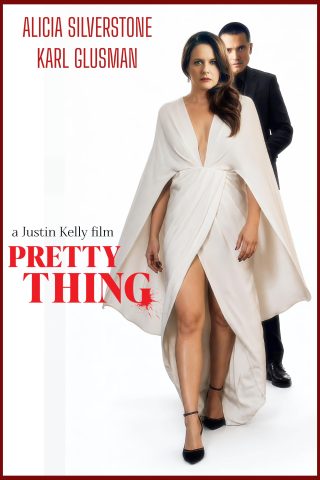 Pretty Thing
Sophie, a successful pharmaceutical executive, is drawn into an obsessive relationship with a younger man. What begins as a consequence free game of seduction quickly spirals into possession and danger.
Directed by Justin Kelly, a filmmaker who had already explored dynamics of desire and control in films like I Am Michael, Pretty Thing marks Alicia Silverstone's return to openly sensual territory after years away from it. She plays Sophie, a pharmaceutical executive who begins an obsessive relationship with a younger man, Elliot, played by Karl Glusman, in a classic nineties erotic thriller template updated with a contemporary sensibility and, notably, gender roles reversed from genre tradition. The film, released theatrically and digitally on July 4, 2025, was met with cautious reviews from genre critics, who appreciated the attempt to modernize the formula but flagged writing that did not always match its ambitions, earning a two and a half out of five rating from several independent outlets. Still, the gender reversal remains genuinely interesting, with a female lead holding the economic and social power in the relationship, an inversion that recalls Fatal Attraction but told from her point of view. Silverstone brings unexpected vulnerability to the role, making Sophie's slow transformation from a woman in control to a victim of her own obsession believable. Not a masterpiece, but Pretty Thing proves that the audience nostalgic for the nineties theatrical erotic thriller is alive and well, and ready to embrace new variations on the genre.
see full review
Pretty Thing
Sophie, a successful pharmaceutical executive, is drawn into an obsessive relationship with a younger man. What begins as a consequence free game of seduction quickly spirals into possession and danger.
Directed by Justin Kelly, a filmmaker who had already explored dynamics of desire and control in films like I Am Michael, Pretty Thing marks Alicia Silverstone's return to openly sensual territory after years away from it. She plays Sophie, a pharmaceutical executive who begins an obsessive relationship with a younger man, Elliot, played by Karl Glusman, in a classic nineties erotic thriller template updated with a contemporary sensibility and, notably, gender roles reversed from genre tradition. The film, released theatrically and digitally on July 4, 2025, was met with cautious reviews from genre critics, who appreciated the attempt to modernize the formula but flagged writing that did not always match its ambitions, earning a two and a half out of five rating from several independent outlets. Still, the gender reversal remains genuinely interesting, with a female lead holding the economic and social power in the relationship, an inversion that recalls Fatal Attraction but told from her point of view. Silverstone brings unexpected vulnerability to the role, making Sophie's slow transformation from a woman in control to a victim of her own obsession believable. Not a masterpiece, but Pretty Thing proves that the audience nostalgic for the nineties theatrical erotic thriller is alive and well, and ready to embrace new variations on the genre.
see full review
 Night Stage
An actor and a politician begin a secret relationship built on risky encounters in public places. As the line between private and public life starts to crack, their shared game of transgression turns into a threat for them both.
Directed by the Brazilian duo Filipe Matzembacher and Marcio Reolon, already known for the acclaimed Hard Paint, Night Stage premiered at the Berlinale in February 2025 before opening in British cinemas on April 3, 2026 through Peccadillo Pictures, the veteran European LGBTQ+ specialty label. The film follows the clandestine relationship between an actor, played by Gabriel Faryas, and a politician, Cirillo Luna, bound by a shared fetish for sex in public places, a narrative device the directors use to explore exposure, power and social vulnerability in a country where homophobia remains a live political issue. PinkNews described it as an elegant thriller that uses physical risk as a metaphor for the existential risk of living openly in a hostile environment. Entertainment Focus expressed reservations about the narrative's footing in its second half, while still praising the intensity of the performances and the dark, sensual nighttime cinematography that renders contemporary Rio de Janeiro as a stage of shadows and desire. The film also collected awards at several festivals, including the Rio de Janeiro International Film Festival. Never slipping into the explicit, Night Stage builds its erotic charge on anticipation and the risk of discovery, a suspense mechanism that pulls it closer to psychological thriller than romantic melodrama, confirming contemporary Brazilian cinema as one of the genre's most interesting workshops.
see full review
Night Stage
An actor and a politician begin a secret relationship built on risky encounters in public places. As the line between private and public life starts to crack, their shared game of transgression turns into a threat for them both.
Directed by the Brazilian duo Filipe Matzembacher and Marcio Reolon, already known for the acclaimed Hard Paint, Night Stage premiered at the Berlinale in February 2025 before opening in British cinemas on April 3, 2026 through Peccadillo Pictures, the veteran European LGBTQ+ specialty label. The film follows the clandestine relationship between an actor, played by Gabriel Faryas, and a politician, Cirillo Luna, bound by a shared fetish for sex in public places, a narrative device the directors use to explore exposure, power and social vulnerability in a country where homophobia remains a live political issue. PinkNews described it as an elegant thriller that uses physical risk as a metaphor for the existential risk of living openly in a hostile environment. Entertainment Focus expressed reservations about the narrative's footing in its second half, while still praising the intensity of the performances and the dark, sensual nighttime cinematography that renders contemporary Rio de Janeiro as a stage of shadows and desire. The film also collected awards at several festivals, including the Rio de Janeiro International Film Festival. Never slipping into the explicit, Night Stage builds its erotic charge on anticipation and the risk of discovery, a suspense mechanism that pulls it closer to psychological thriller than romantic melodrama, confirming contemporary Brazilian cinema as one of the genre's most interesting workshops.
see full review
 Blue Film
A young camboy meets a masked client willing to pay top dollar for his company. When the mask finally comes off, the two discover a connection from the past that turns the encounter into an emotionally charged, ambiguous confrontation.
Long rejected by major festivals, including Sundance and SXSW, for the uncomfortable nature of its material, Elliot Tuttle's directorial debut Blue Film eventually found a home with Obscured Releasing and opened in American theaters on May 8, 2026. The film follows Aaron Eagle, played by Kieron Moore, a young camboy who discovers an unexpected personal connection with a wealthy, masked client, played by veteran Reed Birney, in a claustrophobic confrontation that unfolds over a single night. Slant Magazine called it a fearless interrogation of aberrant sexuality and trauma, while The Film Experience described it as a transgressive, hypnotic work that unsettles the viewer without ever losing control of its visual language. Paper Magazine noted how Tuttle manages to portray desire as an act of power and vulnerability at once, never reducing his characters to mere narrative functions. Despite its uncomfortable subject matter, tied to the world of findom and online sex work, the film carefully avoids explicit depiction, focusing instead on psychological tension and the unspoken between its two leads. Described by multiple critics as a clever, perverse erotic love story anchored by two magnetic performances, Blue Film represents the most independent, radical spirit of this ranking, a reminder that arthouse erotic cinema still finds room, however hard won, even within traditional distribution channels.
see full review
Blue Film
A young camboy meets a masked client willing to pay top dollar for his company. When the mask finally comes off, the two discover a connection from the past that turns the encounter into an emotionally charged, ambiguous confrontation.
Long rejected by major festivals, including Sundance and SXSW, for the uncomfortable nature of its material, Elliot Tuttle's directorial debut Blue Film eventually found a home with Obscured Releasing and opened in American theaters on May 8, 2026. The film follows Aaron Eagle, played by Kieron Moore, a young camboy who discovers an unexpected personal connection with a wealthy, masked client, played by veteran Reed Birney, in a claustrophobic confrontation that unfolds over a single night. Slant Magazine called it a fearless interrogation of aberrant sexuality and trauma, while The Film Experience described it as a transgressive, hypnotic work that unsettles the viewer without ever losing control of its visual language. Paper Magazine noted how Tuttle manages to portray desire as an act of power and vulnerability at once, never reducing his characters to mere narrative functions. Despite its uncomfortable subject matter, tied to the world of findom and online sex work, the film carefully avoids explicit depiction, focusing instead on psychological tension and the unspoken between its two leads. Described by multiple critics as a clever, perverse erotic love story anchored by two magnetic performances, Blue Film represents the most independent, radical spirit of this ranking, a reminder that arthouse erotic cinema still finds room, however hard won, even within traditional distribution channels.
see full review